

Use Expert Metal Flashing to Stop Roof Leaks at Their Source
A large gap is not necessary for water to do significant harm. Moisture can seep into your walls, ceilings, and structural timbers from even a minor flashing failure on your roof, frequently for months before you realise it. Our skilled crew installs and fixes metal flashing, which seals every weak spot on your roof.
When most homeowners consider roof protection, shingles come to mind. However, the hardest waterproofing work on any roof is actually done by the metal flashing—thin strips of metal sealed around joints, edges, and penetrations.
Water enters the most vulnerable areas of your house—around the chimney, along roof valleys, and where the roof meets walls—if roof flashing is not installed correctly. Rot, mould, insulation damage, and expensive structural repairs result from this over time. If you're experiencing leaks, our roof repair team can help diagnose and fix the issue.
Our skilled roofing professionals provide long-lasting work whether you need new flashing installed on a brand-new roof, existing flashing repaired, or an ageing system completely replaced.
What Is Metal Flashing and Why Is It Necessary for Your Roof?
Metal flashing is thin sheeting placed at joints, transitions, and penetrations throughout your roof. It is usually composed of galvanised steel, aluminium, copper, or lead. Its function is straightforward but crucial: it directs water away from places where roofing materials by themselves are unable to produce a waterproof seal.
A potential weak point is anywhere your roof meets a vertical surface, changes direction, or has a pipe or chimney going through it. These are precisely the places where water collects and eventually seeps in. Water is safely directed off the roof by flashing, which fills in those gaps.
Where is flashing set up?
- Around the sides and bases of chimneys
- Where two roof planes converge, along roof valleys
- The intersection of exterior walls and rooflines
- In the vicinity of skylights, vent pipes, and HVAC penetrations
- Along the roof's lower edges, or drip edges
- At step transitions, beneath roof tiles or shingles
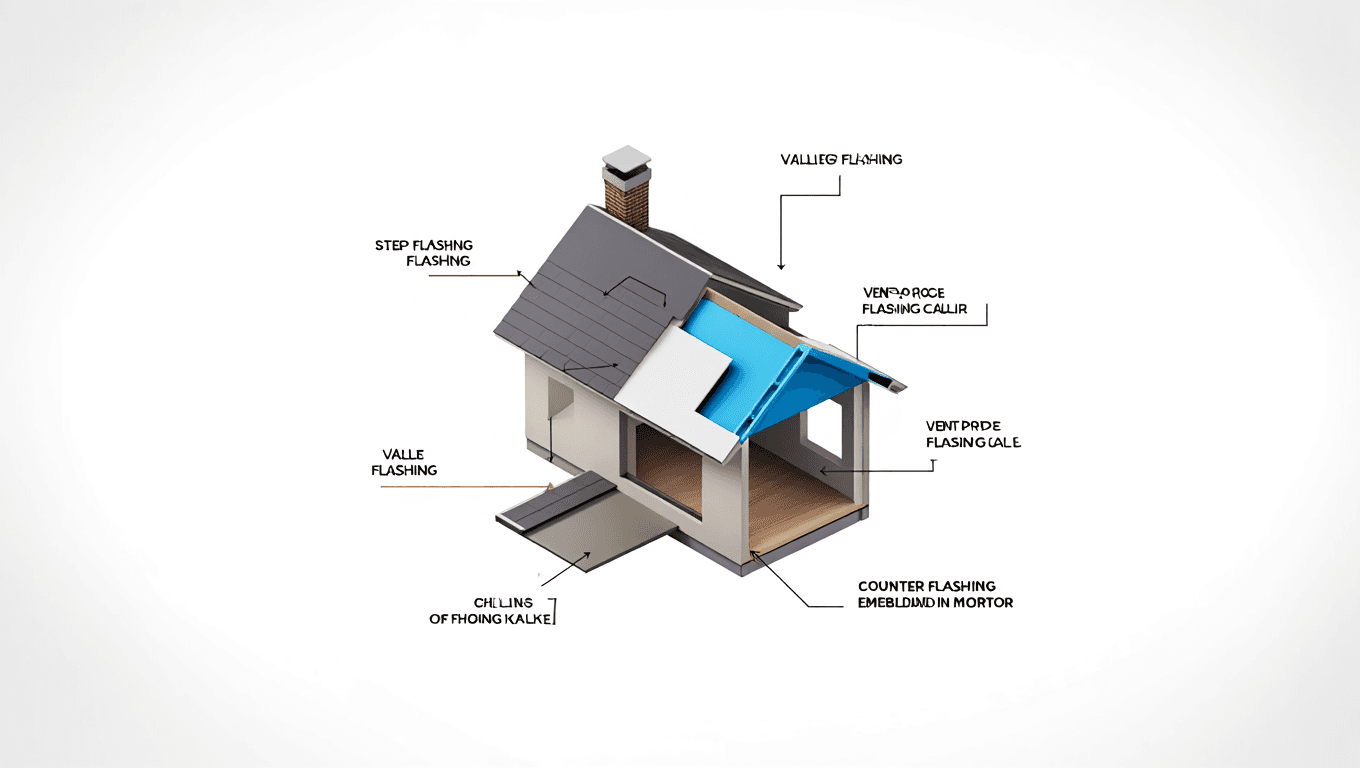
In addition to stopping existing leaks, properly installed metal roof flashing stops leaks from occurring in the first place.
Metal Flashing Types We Install and Fix
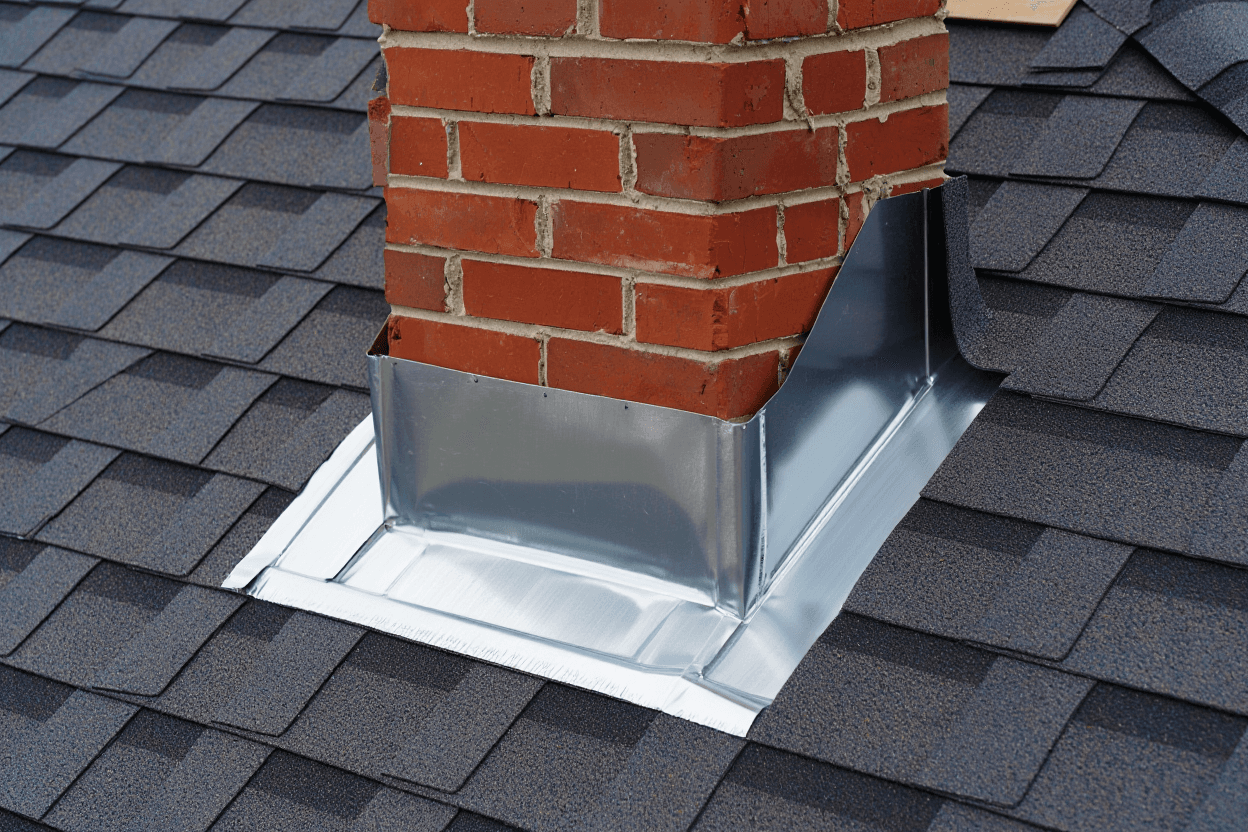
Chimney Flashing
One of the most important and intricate flashing systems on any roof. The gap between the chimney masonry and the surrounding roof surface is sealed by a series of metal layers called base flashing, step flashing, and counter flashing. Chimney flashing failure is one of the main reasons for interior water damage. Need chimney repair? Contact us.
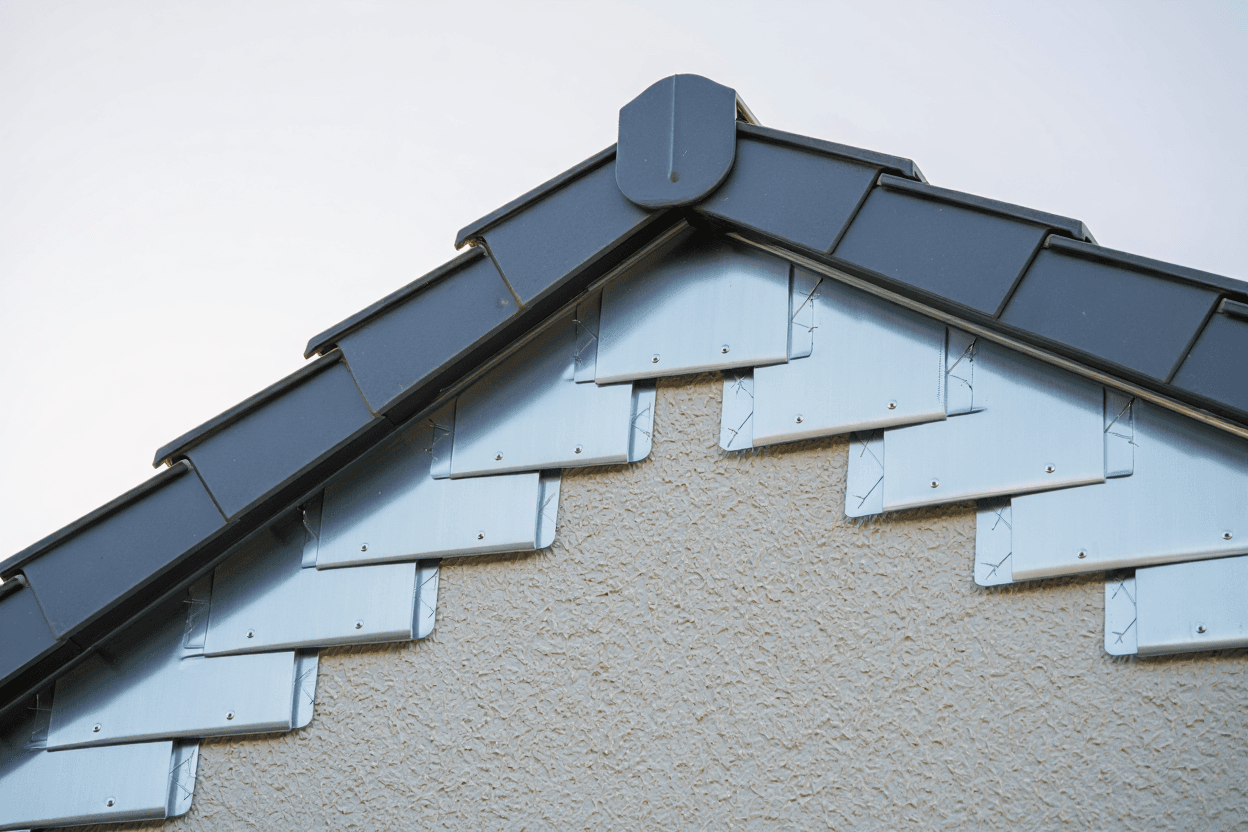
Step Flashing
Used anywhere a sloped roof meets a vertical wall, like a side wall or dormer. Water is moved down and away from the wall junction by this waterproof barrier, made up of individual L-shaped metal pieces layered in a step pattern with each course of shingles.
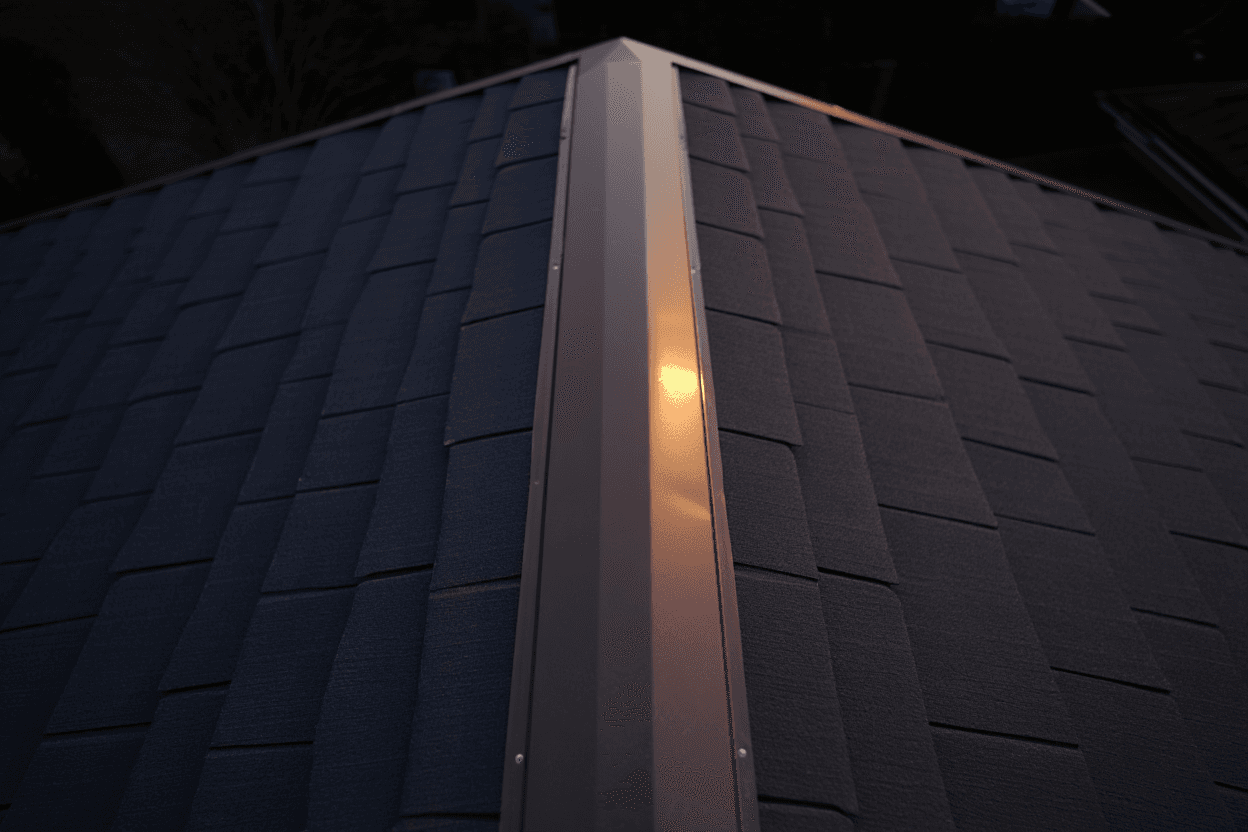
Valley Flashing
Rainwater flows through roof valleys—the V-shaped channels where two roof sections converge. Valley flashing lines these channels with metal to stop water from backing up under shingles and seeping into the decking below.
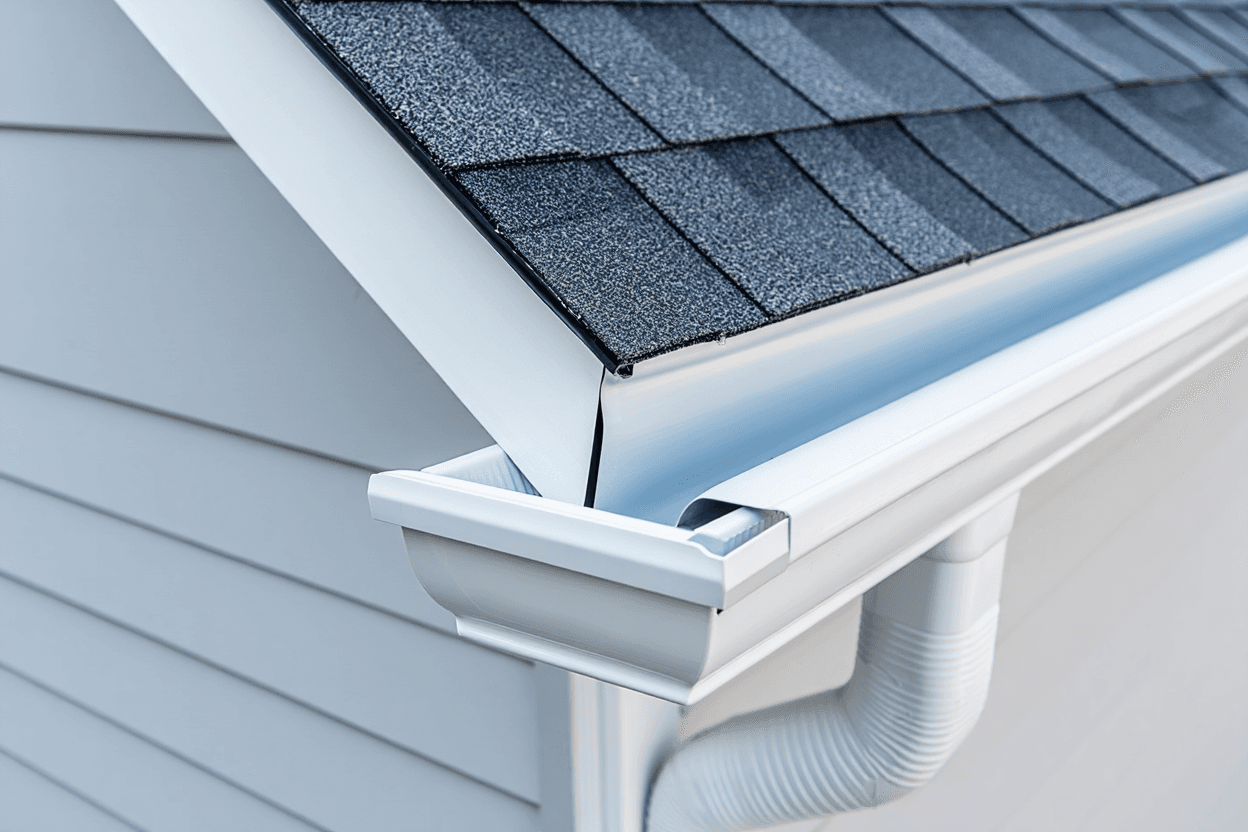
Drip Edge Flashing
Installed along your roof's rakes and eaves. It keeps water from wicking back under shingles and rotting the fascia boards and roof decking by cleanly directing it off the roof edge. Works in tandem with proper gutter installation.
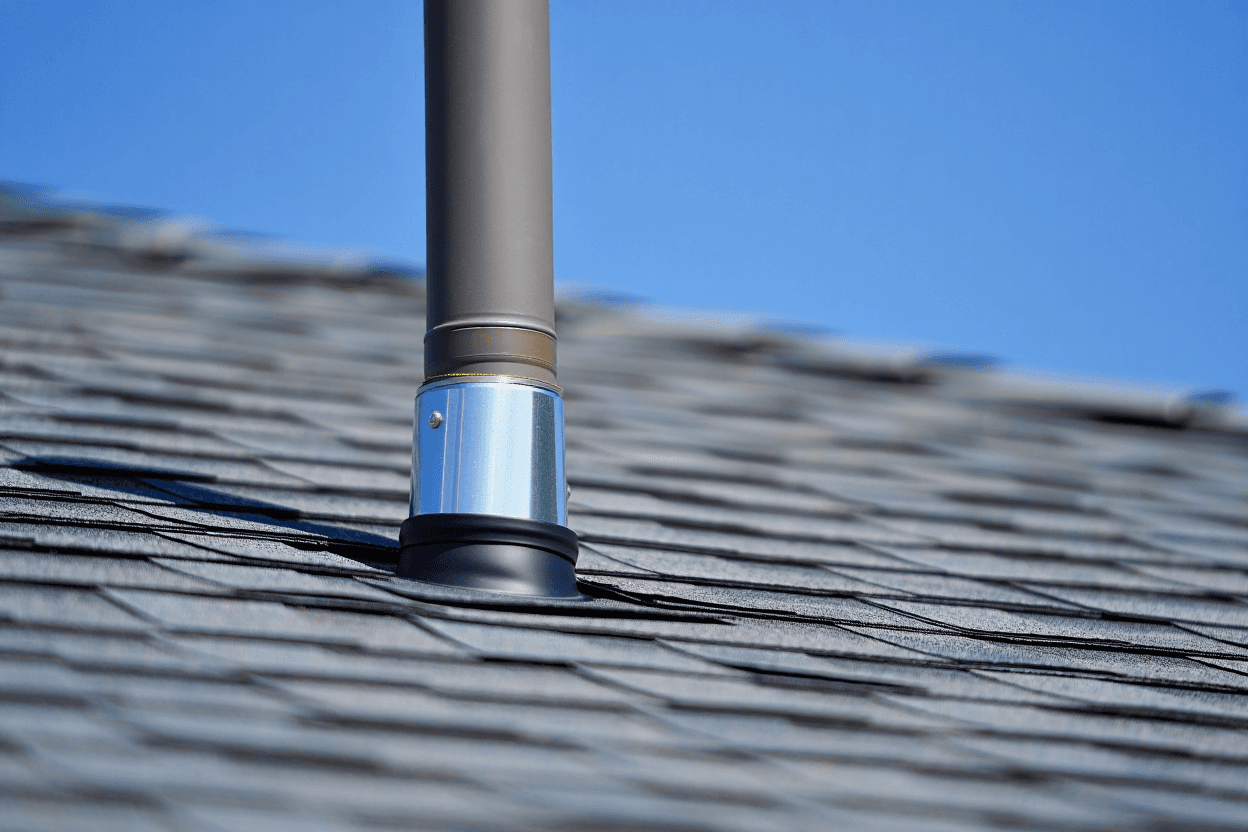
Vent Pipe Flashing
Each plumbing vent pipe that comes out of your roof requires a flashing collar. Vent pipe flashing typically combines a metal base with a rubber boot gasket to allow pipe movement, forming a waterproof seal around the pipe base.
Counter Flashing
The top layer of a two-part flashing system, counter flashing is most frequently used in conjunction with wall and chimney flashing. It seals the top of the flashing system against wind-driven rain by overlapping the base (step) flashing below and usually being embedded into mortar joints or wall surfaces.
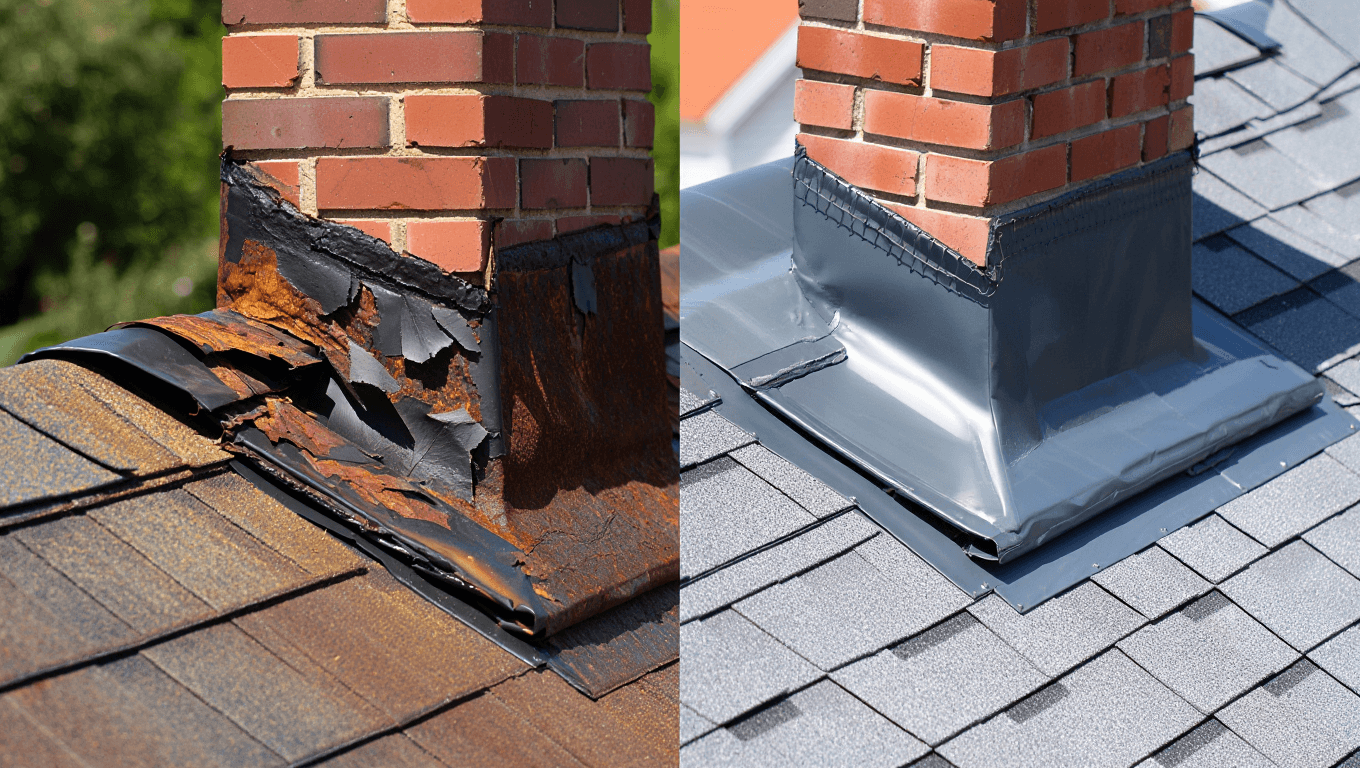
Before & After: Corroded vs New Metal Flashing
The Reasons Metal Flashing Is Among Your Best Roof Investments
- • Water leaks are prevented by sealing all susceptible joints and transition points that cannot be shielded by shingles or tiles alone.
- • By keeping moisture away from insulation, roof decking, and timber framing, it protects your roof structure from rot and mould.
- • A well-flashed roof experiences much less water damage over time, extending the life of your entire roofing system.
- • Metal flashing materials, particularly copper and galvanised steel, are designed to endure decades of heat movement, UV exposure, and severe weather.
- • Quality flashing keeps your house sealed in all weather conditions, from intense rain to freeze-thaw cycles.
- • When installed correctly, metal flashing requires very little maintenance and lasts much longer than other materials like rubber or plastic.
- • A properly flashed, leak-free roof is a major selling point and a prerequisite for passing the majority of property inspections.
Our Expert Services for Metal Flashing
Installing New Flashing
We install long-lasting flashing systems that are appropriately positioned, sealed, and matched to your roofing materials, whether you're building a new roof or replacing an old one.
Replacing Flashing
One of the most frequent reasons for roof leaks is old, corroded, or improperly installed flashing. We restore complete waterproof protection by removing deteriorated flashing and replacing it with premium metal.
Repairing Flashing
Not every flashing issue calls for a complete replacement. Our staff can perform targeted repairs to stop leaks in flashing that has lifted, cracked, or lost its sealant bond without having to pay for a complete replacement.
Inspection of Flashing
Are you unsure if a leak is coming from your flashing? We perform comprehensive roof and flashing inspections to find existing issues and early warning indicators before they become costly issues.
Emergency Flashing Repair
In rainy weather, a damaged roof cannot wait. We provide emergency roofing services to swiftly secure your property and stop additional water intrusion while permanent repairs are being scheduled.
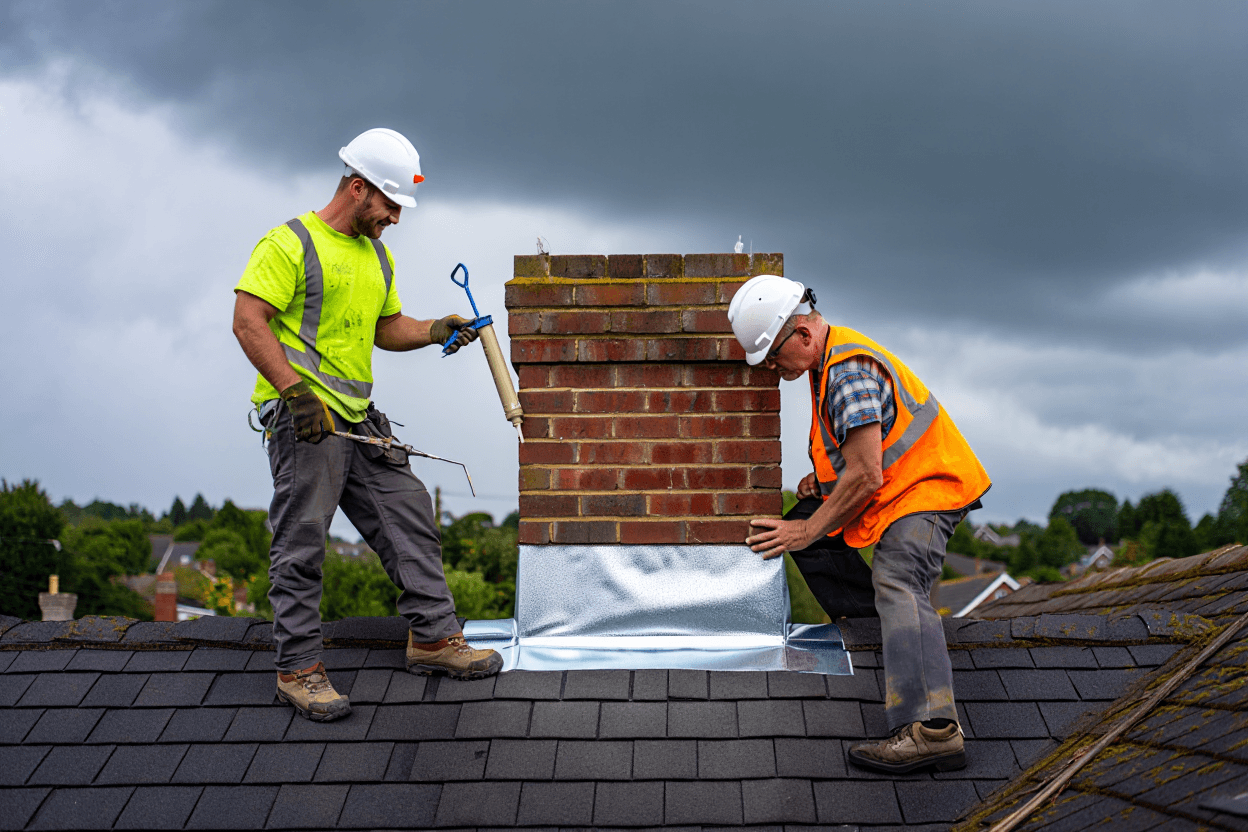
A Step-by-Step Guide to Installing Metal Flashing
Inspect the Roof
We start by thoroughly inspecting your roof and all of the flashing that is currently in place. We pinpoint problem areas, gauge the degree of any damage, and determine what supplies and techniques are required.
Planning and Measuring
For flashing to function properly, precise measurement is necessary. To guarantee accurate cuts and overlaps, we measure each transition, valley, and penetration.
Selecting Materials
We choose the best flashing material for your roof type, local climate, and budget—from copper for superior longevity and aesthetics to galvanised steel and aluminium for affordable dependability.
Expert Installation
Each flashing piece is installed by our certified roofers in accordance with industry best practices and manufacturer specifications—correctly overlapped, sealed, and integrated with your roofing system.
Final Inspection and Cleanup
We perform a final inspection after installation is finished to make sure all joints are sealed and the work satisfies our quality standards. Before we depart, we thoroughly clean up the area.

The Reasons Businesses and Homeowners Rely on Us for Roof Flashing
- • Our team has years of practical experience installing and fixing various kinds of roof flashing on both residential and commercial properties.
- • We only use proven, long-lasting flashing materials from reliable suppliers.
- • We are fully insured and licensed.
- • The pricing is transparent and competitive, with no surprises or hidden fees. Before any work starts, we provide precise, itemised quotes.
- • Quick turnaround — We recognise the urgency of a leaky roof. On every project, we place a high priority on timely scheduling and effective execution.
- • We guarantee the quality of our work. We offer a workmanship warranty for our flashing installations and repairs.
- • Better recommendations and longer-lasting results result from our understanding of the roofing challenges unique to your local climate and building styles.
Alert Indications That Your Roof Flashing Needs Care
Don't wait for water to enter your house. Keep an eye out for these warning indicators:
- • Water stains on walls or ceilings, especially in close proximity to exterior walls, skylights, or chimneys
- • Roof leaks close to the chimney—one of the most typical signs of a failed chimney flashing system
- • Corroded flashing—the waterproof integrity has been compromised
- • Lifted or bent flashing pieces—flashing that has separated from the roof or wall surface is no longer properly sealing
- • Dried-out or crumbling caulk surrounding flashing joints—creates gaps for water entry
- • Damp or mouldy insulation in the roof space—a clear indication that moisture is penetrating the roof through a weak spot
- • After a storm, wind can tear or dislodge flashing sections, leaving them vulnerable right away
Please get in touch with us right away if you see any of these indicators. Early detection of flashing issues is nearly always less expensive than repairing the water damage they cause.
Serving Canberra and the ACT Region
For homeowners, landlords, property managers, and business clients in Canberra and the surrounding areas, we offer expert metal flashing installation and repair services. Our team has the tools and knowledge to provide a comprehensive, long-lasting flashing solution, regardless of whether you own a single-story family home, a multi-story residential building, a retail establishment, or an industrial facility.
We provide services for residential residences, unit complexes, commercial buildings, industrial facilities, and heritage and period properties. We service:
Associated Services
Metal flashing works best as part of a complete roofing system. We also offer:
Local area pages: all services, Belconnen, Canberra CBD & Inner North.
- Roof repairs Canberra — leak and storm-damage callouts
- Gutter & Snowpipe Installation —protects your roof edges and drainage
- Ridge Capping & Repointing —seals ridge lines and prevents leaks
- Tile Roof Replacement —full roof replacement when needed
- Metal Roof Installation —Colorbond steel roofing
Request a Free Roof Flashing Quote and Inspection
A minor flashing issue can quickly escalate into a significant repair bill. The best course of action is to have it examined right away. Our staff will examine your roof, find any flashing problems, and give you a precise, no-obligation quote. Book a free roof inspection today.
We service all of Canberra's suburbs and the ACT region. Contact us to confirm we service your area and schedule your inspection.
Common Questions Regarding Metal Roof Flashing
Metal flashing is thin sheets of metal – usually galvanised steel, aluminium, or copper – installed at joints, edges, and penetrations on a roof. Its purpose is to seal areas vulnerable to water infiltration, like where the roof meets a chimney, wall, or valley, directing water safely off the roof surface.
Copper flashing can last 50–70 years or more; galvanised steel and aluminium flashing usually lasts 20–30 years. Flashing can fail earlier if poorly installed, weather-damaged, or if the surrounding sealant degrades.
Yes. In many cases, a roof leak is directly caused by defective or missing flashing. Having your flashing professionally repaired or replaced can stop an active leak and prevent new ones from developing.
The cost varies depending on the type of flashing, material chosen, roof complexity, and extent of work required. We provide free, no-obligation quotes so you know exactly what to expect before work begins.
It is best practice to replace flashing when a new roof is installed. It should be replaced when it exhibits significant rust or corrosion, has lifted or separated from the roof, is cracked or physically damaged, or has reached the end of its service life.
In most cases, yes. Metal flashing offers superior durability, weather resistance, and longevity compared to plastic alternatives, which can become brittle due to UV exposure and temperature fluctuations. Metal is the industry-standard choice for lasting roof leak prevention.
Yes, targeted repairs are often sufficient if the flashing is structurally sound but has lifted, lost its seal, or developed a minor crack; however, heavily corroded or significantly damaged flashing is usually better replaced entirely.
Yes, even basic roofs need drip edge flashing along their eaves and rakes to prevent water damage. Any roof with a chimney, skylight, vent pipe, wall junction, or valley needs properly installed flashing.